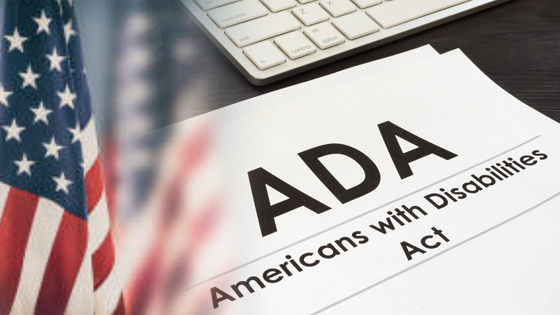
While your company might know the risk of not complying with the Americans with Disabilities Act (ADA), they may not know how to implement it or verify compliance. ADA-compliant companies not only promote their brand as one that values employees from all walks of life but also save on lawsuits filed against the company. Disability service providers help companies implement the ADA and become ADA compliant through policies, strategic communication, and complaint resolution.
What is the Americans with Disabilities Act (ADA)?
Signed into law by President George W. Bush in 1990, the ADA champions the rights of disabled individuals. The civil rights law prohibits discrimination against people with disabilities in all areas of life. This includes places of employment, schools, entertainment, transportation, and all public and private places open to the general public.
Three Things You Didn’t Know About the ADA?
ADA implementations affect our lives in different ways, from disabled parking spaces to wheelchair ramps adjacent to a flight of stairs and the availability of American Sign Language (ASL) interpreters. However, there is much more to ADA than just that. Below are some of the things you might be unaware of about the Americans with Disabilities Act:
The ADA and Technology
The ADA requires institutions to provide people with disabilities access to all forms of technology, this is not enough. This includes incorporating assistive technology. Assistive technology enables people with disabilities to perform functions or tasks they would have otherwise been unable to. For example, a person who is Deaf cannot benefit from a video that lacks subtitles, while a person with low vision will be unable to read texts without a magnifier. Assistive technology provides better accessibility options.
Institutions should also provide individuals with disabilities with devices and assistive services such as ASL interpreting and Communication Access Real-Time Translation (CART) services to facilitate the performance of essential tasks with ease and independence.
Accessibility and Accommodation
People with a disability may require special provisions to access the majority, if not all, structures and means of transportation. When it comes to structures, the ADA states that public places should provide accessible architecture to individuals with mobility impairments. This includes ramps, elevators, roll-in toilets, and showers. For transportation, public means of transportation should provide provisions in which people with disabilities can utilize them. This includes features such as automatic doors, raised lettering, and braille signage.
In terms of accommodation, the ADA states that institutions should provide means of accommodation that for people with disabilities. This includes places, hotels, and learning institutions. They should provide rooms that not only accommodate their needs, but they should also be of a similar rated standard, if not higher.
Recruitment and Appointment
While many staffing managers are now making an effort to include qualified people with disabilities to improve their talent pool, the law ensures equal opportunity and appointment. The ADA also stipulates that learning institutions should not discriminate against job candidates during selection based on disability.
Applied Development Offers ADA Compliance Services
At Applied Development, we support people of all abilities’ right to successful work, education, and communication. Our services include sign language interpretating, Communication Access Real-Time Translation (CART), Section 508 compliance, and strategic communications.
Call us today at (410) 571-4016 or contact us online for more information about ADA compliance and accommodations.